
Hi! My name is Sharrod, and I could rattle off a luscious list of performance credits, or accolades, or even my big dreams for myself that I’ve yet to reach. I could sum it all up as,
I’m a multi-hyphenate–as I’ve done many times since first being labeled it years ago. But that title doesn’t necessarily resonate with me as the true representation of my success in a very tough industry.
In fact, how to introduce myself and even how I see myself got me thinking about success. About how we are socialized to lead with our resumes when walking into new rooms or meeting someone for the first time. Letting our “successes” speak for us. But is that practice a good or bad thing?
I think it’s neither.
What defines success in today’s landscape? The better question is: who defines it?
The Harsh Realities of Chasing the Broadway Dream
Living in New Jersey in my early 20’s, chasing my Broadway dream, there were many hard days–especially in the beginning. Being cut from countless auditions, forced to work uninspiring survival jobs, dying to become a New York City resident but unsure of exactly how to make it happen. After a while, I started researching to learn what was the traditional path of a Musical Theater performer—a career I’d fell into towards the end of my college career.

I went to Montclair State University in New Jersey where I double majored in Dance and Communication Studies. When I took my very first formal dance class freshman year, can I make it was the last thing on my mind. I just knew I loved performing growing up, although dance wasn’t something my parents allowed me to pursue. I was a musician through and through. You only get four years of college (in most cases) to absorb all you can and get really good at something, before you’re booted out into the real world to give it your best go. Hoping success is on the other side of it all waiting for you. So, deciding to start dance at 18 years old, to bet on myself “late in life” definitely laid the pressure on thick.

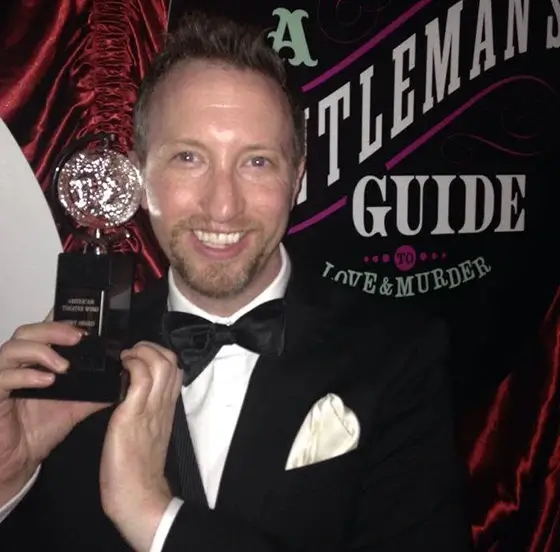
Thankfully, I booked amazing jobs right out of school, working with industry titans like Baayork Lee and Andy Blankenbuehler immediately. Touring the USA in the classics as well as contemporary pieces of theater. I was experiencing success well enough for a young, hungry dancer who did not study Musical Theater. But climbing the ladder to Broadway meant there were still many hard days ahead.
During post-audition coffee dates or lunches, with friends who got cut right alongside me that day, I became notorious for asking the “deep questions.” One question in particular:
“If you don’t make it to Broadway or to the mountain top of whatever your big dream is, will you feel like you were not successful?”
I was often met with a defiant “yes,” or an unenthusiastic “no.” But the response that made lean in further came from the friends who answered, “I don’t know.” It always led to my favorite follow-up question:
“Well, how do you define success?”
My definition of success has taken on many iterations over my lifetime spent as a performing artist (starting when I was 9 years old!) Today, success for me is being able to wear many different hats. I’ve discovered I have other gifts and skills in various areas of life—many outside of performing. My aim is to use all of my gifts to create a full life for myself. I wasn’t always this way. I was often told, you’re doing too much or that I’m never satisfied. I fully blame it on being a Capricorn.
But remember when I almost said I’m a multi-hyphenate?
That means on any given day–sometimes all in one day–I could be wearing my teacher, writer, actor, host, creative consultant, dancer, producer, content creator, or choreographer hat! Stepping into whichever role is needed to accomplish the task or project at hand. Being able to use all of my gifts is success to me. I wonder what success is for you.
So ask yourself: what is my personal definition of success?
Inspiration is just that. It’s not always a Blueprint for Success…
I love a good Q&A. Like the Actors on Actors conversations on YouTube, or a podcast episode featuring an artist I look up to. At first it was because I thought I was getting the cheat code on how to navigate different aspects of the industry. Hearing all the smart and crafty ways someone else did it before for me, what worked for them, what tools they used to reach their dreams. Sure, those conversations are full of those goodies that I’ve tried out in my career–oftentimes working well for me. But many times, they did not.
Why? Over time, I noticed a pattern.
Some stroke of serendipity: right place, right time, right talent was often the crux of how someone started in the business. A moment that was uniquely theirs. But you can never predict when, perfectly prepare for it, or even manufacture it for yourself. As cliche as it sounds, all you can do is keep showing up and trust. If I had said that to my 22 year old, newly graduated self, I would have been inspired for about ten minutes and then gone right back to spiraling over what is the “right way” to do this.
Talk about serendipity?

I made my Broadway debut in 2016 in a new musical called Tuck Everlasting. I booked the show in what I considered at the time to be a “non-traditional” way. (I’ll save the full details of that story for my memoir one day.) But let’s just say it was my right place, right time, right talent moment. I was an immediate replacement hire, and had a little over a week to learn the entire show–which was already in previews at the Broadhurst Theater. I was the second immediate replacement hire and 90% of the cast were Broadway veterans. The stakes were high.
But I was determined to succeed.
And I did! Although I beyond appreciate it now, I always imagined my debut story would be like many other artists I looked up to. Achieved in the traditional way I’d heard about in all those artist conversations…
Step 1. Go to school and get the degree
Step 2. Audition, find an Agent, audition some more!
Step 3. Cross your fingers you get a yes and Broadway calls before you’re 30 years old
This seemed like the universal process. The way it’s done. Almost like an algorithm for success in the Theater industry. What I really learned from that Broadway debut experience?
No two artist’s journeys are ever the same.
There was no talk-back, Q&A, or mentor that could have fully prepared me for how it all happened. How quickly your life changes, the choices you should make to keep going. I got the job and made it happen because of everything I uniquely possessed inside of me up until that point.
Pro-Tip #1:
Stop comparing yourself. Just… stop. There’s no one way to make it, only your way.
If There are Many Ways to “Make It” in the Industry — Find Your Way
Education is always tried and true place to start. The tool box you graduate with is hopefully full of all sorts of techniques to help you along the way. But sometimes in the real world, the tools don’t work or you even outgrow them. You might realize after your first six months of auditioning even, none of them ever worked for you. (I have heard stories of people feeling that way post graduation.) You’re left asking yourself, now what?
Pro-Tip #2:
Curiosity is one of the greatest tools. The learning never stops. (We’ll get to this later!)
I was big on taking dance class when I decided to stop accepting non-union job offers. It was in large part because of what my agent at the time said to me: “If you want to get to Broadway, you have to stop leaving town. Stay here, audition consistently, let casting get to know you.” So, I planted my feet. I discovered class was a great way for me to meet Choreographers and Directors, current and up-and-coming. Class didn’t feel like a pressure cooker like auditions did. I could share my work for fun, do my thing–with lighter judgement coming at me, while still practicing being competitive.

Never Forget: auditioning is ultimately a competition. Therefore, as an artist you have to be competitive.
I would offer my dance services up for pre-production sessions (where a choreographer develops dance phrase work on a small group of dancers for a production), after class, in an email, or even in a social media message. Times have changed, so I’m not sure that would work today. But I was always curious about what they were working on and how I could be of service. The pay-off? Not always monetary, but doing pre-pro helped them get to know my work. Who I am as a person first-hand. Creatives usually just want to work with talented individuals they also like as people.
Pro-Tip #3:
Visibility yields connections → connections yield more work for you. The Entertainment industry at-large runs on the idea of who you know (and it always will!)
No Q&A or interview series or teacher taught me that verbatim in college. Boots on the ground, showing up, and trusting my journey (like I mentioned earlier!) taught me that. It came from a series of signs uniquely created for me that I saw and followed. It’s a pivotal part of how to navigate staying relevant in the ever changing tides of the entertainment industry. We all have instincts for a reason. A gut feeling we get. Are you trusting yours? Or trying to stick to the roadmap you heard someone else used to reach the top?
You make your own blueprint for life.
What an Arts Education Actually Gives You
What have we learned so far?
Well, let’s review!
1. Who defines success: YOU
2. Is inspiration important: OF COURSE
3. Is there more one way to reach your dream: ABSOLUTELY
If you’ve made it to this point, it’s safe to say you’ve learned a lot. A lot about me, the life of an artist, the different ways to think about it all. Hopefully, you’re feeling empowered to take stock over your individual creative self, first and foremost. To start with you. Oh, I forgot one…
4. Is getting a degree a requirement for success:
My dad always said, “I’m a singer, your mom can sing–it’s always been in our family. We just assumed you three boys could too.” Thus began our arts education. I was fortunate enough to attend the world renowned Newark Boys School and Arts High School–the first of its kind in the United States of America.


Attending these incredible institutions taught me to use five specific skills early on:
- Communication
- Collaboration
- Adaptability
- Resilience
- Curiosity
- BONUS: Learning On-The-Job (we’ll get to this one later!)
But after all those years of studying music, I got accepted into Montclair State University and still had no idea what I wanted to do with my life. My major was undeclared for the entirety of my freshman year of college. I’d decided Classical music had served its purpose in my life, or so I thought. It had afforded me the opportunity to attend higher level schools while gaining exposure to the potential of my musical talent.
Once I declared Dance and Communication Studies as my official majors, I was well on my way. What I didn’t realize? These five skills (and more!) would be my foundation to launch a long-term career and a well-rounded life.
Let’s break it down!
Communication
What if your greatest artistic tool isn’t your talent, but your ability to communicate it?
I’ve said it before and I’ll say it again: it starts with you. Why? Art comes from you. It’s about how you see the world, how you understand it. All the ways you’re in conversation with it and how contributing your work aids in making it a better place. We will always need art in society, because art heals. But if you can’t communicate with yourself, how will you be able to communicate your ideas to the world?
An arts education is one of the best places to develop this skill. The tools you gain, the expertise you hone, the unique vision you develop often starts in the classroom. In a diverse space of other artists who are vastly different from one another. All challenging, encouraging, and informing each other’s perspective.
Collaboration
Why do so many artists believe collaboration equals compromising their voice?
Collaboration is such a staple part of life. Yes, life. Be it in your career, relationships, and everything in between. We artists are fortunate in that we get to experience it constantly and early on. Producing a stage performance or a film, publishing a book, recording an album–all
require teamwork. Every director or choreographer has an associate, or a small team behind the table. The credits at the end of every film run for three to ten minutes or more listing every person who worked on it. The highest paid celebrity has an agent, manager, publicist, stylist, personal assistant–you get my point.

Art gets made, and made well, in collaboration.
What artists easily forget? Collaboration makes the work richer. Your voice, richer. Not quieter or smaller–richer. I can confirm, I learned that in school. Being in choir in middle school and high school taught me how to bring my value to a unit in service of the larger sound. Co-choreographing original dance pieces in college affirmed that lesson. You can’t always do it alone. It’s not always solely about you. Collaborating elevates art.
Adaptability
Why do artists mistake changing direction for giving up?
This is a BIG one. Remember that toolbox you graduate with? Getting good at this skill means recognizing along the way when you need to rummage through that toolbox to find a new technique to use. Also, knowing when to ask for help.
I’m the type of Capricorn (sorry if you don’t believe in astrology!) who naturally clung to structure growing up. I thrived in school because of it. When it became clear at the end of my freshman year that I would be double majoring in Dance and Communication studies–for a moment I panicked. On paper, one of my majors would lead to an unpredictable lifestyle vs the other statistically more likely to offer me stability (or success) – according to “real world” standards. Not to mention the challenge I’d face bouncing back and forth from sitting in a classroom consuming audibly to physically moving each day.
If chasing the artist life was for me post graduation, I needed to fully accept the lifestyle that comes with it. Here are the steps that led me to radical acceptance of “the artist life” in school:
1. Understand The Reality. Being an artist means living an unpredictable life.
2. Never Lose Sight of Your Goal. There is room for you in the industry. Just keep going!
3. Examine What That Really Means for You: I like structure, being prepared, knowing what I’m walking into. Being a performing artist can feel like the opposite of that sometimes. Success is a sliding scale, adulthood stability is not promised. It might feel like going with the flow indefinitely. You’ll have to take what life hands you. Get comfortable with that right now!
Therefore, adaptability is your best friend. It will serve you on the job, especially navigating the process of creating work with varying creative visions in one room. Auditioning will always be a part of it and each one demands something different from you. Entertainment contracts have an end date. Then what? Being adaptable will even help you stay afloat in between with getting survival jobs to maintain yourself always.
Resilience
Rejection isn’t evidence that you’re untalented, it’s confirmation that better is coming!
Resilience is the name of the game. You’d think this one is obvious. But if you think about it more deeply, I can guarantee some of the strongest people you know are probably artists. We internalize that fact rather quickly, often because of those go-to phrases teachers say in classrooms or parents and family members indirectly imply:
“You have to have tough skin in this business”
“You’re going to get so many ‘no’s’ before you get a yes”
“The show must go on!”
“Being a ___________ [insert artistic medium] is so hard, are you sure you don’t want to do something else?”
…the list goes on. If you’re still here going after your dream, regardless of whether you’ll make it or not–you’ve got that resilience in you. The magic ingredient that will help achieve success. I hope you never lose it!
Curiosity

When was the last time curiosity led you somewhere your life plan never could?
Truth? If I’d written this article pre-pandemic, I would have attached this skill to the career side mainly. But now, I’m happy to report this is one of those skills that serves you across the board. Curiosity is probably the thing that made you go from keeping your talent all to yourself to sharing it with the world. To studying it in school and devoting your life to it.
Curiosity is what did it for me.
A full life is reliant on you staying curious. It works best alongside every skill I’ve mentioned. The best artists are always looking to grow. Growth comes from curiosity (and patience!) Asking questions. Every audition, project, role, and job description will require something different from you. You’ll always need to be curious, looking for the best way to approach it. That’s the trick to continuing to not only work, but work at a higher level every step of the way.
Have you Thought about What Happens after you Reach your Dreams?
Remember that multi-hyphenate title I mentioned? The first time I had ever heard it, and used in a way to describe me, was on a Zoom call with an intimacy coordinator in the Pandemic. This was after my Broadway dream had already been achieved in my 20’s. Around the time when my curiosity for my potential was at an all-time high. I was grappling with the question of whether I truly am more than just, “Musical Theater dancer boy #3 on the left,” aka how the industry saw me for 75% of my career up until that point.
The Pandemic offered me what Oprah says is the greatest gift you can give yourself: time.
The world had stopped. The industry was leveled to the ground. I was not feeling the heat of pressure endlessly weighing on my back to book the next show to stay relevant. For once, I could just do something else.
I asked myself: What else am I interested in outside of theater even?

The answer was already manifesting in my life at the time and stopping to reflect helped me realize it. I excelled in English and History class in school growing up. I especially had an affinity for creative writing especially. Right before the Pandemic, writing was back in my life in a new way: screenwriting. Eventually, my multi-hyphenate title was officially expanded to include “screenwriter, creator, producer” to the line-up behind my name. New dream officially unlocked.
Those five skills: communication, collaboration, adaptability, resilience, curiosity – and then some were needed for what happened next.

I did what artists do: create. I developed, produced, and starred in my very own web series called Neighbors. My goal? Not for it to become some majorly successful TV entity. Would I want that? Absolutely. But I was on an identity journey of self-discovery. What drove my work ethic the most in the birth of this LGBTQ series was proving to the industry, by proving to myself first, that I am more than just a dancer. Success, for me, was simply being able to see the project through to completion. To be proud of what I made–no matter what.
You see, you can be successful more than once. Especially when you define it for you.
The Gift that Keeps on Giving
Quick recap:
I made it to Broadway and I did not study Theater, nor do I have a BFA in Musical Theater. So, if you missed it before–success can still be achieved.
How did I find success when I realized making it to Broadway was in fact a dream of mine, after I’d already graduated and entered the real world?
The gift that keeps on giving: learning on-the-job. Also known as, learning as you go.
The reality is school can only give you so much. It’s still worth it—but you’re never going to remember every minute detail of technique or insight taught. In fact, you won’t even have it all taught to you because every program curriculum is different. Some of it isn’t going to click for you until you’re actually on the job.
I can’t name one opportunity where being good at learning on-the-job didn’t serve me well. Where it didn’t make me more valuable. It creates a constant willingness for people to want to work with you, to have in the room.
Learning on-the-job has been an education, all on its own.
Take how I discovered my writing and storytelling dream in the Pandemic for example. Pre-production, Production and Post Production for Neighbors required me to utilize my Communications background heavily. But I wasn’t going back to the basics or digging out my old college notebooks to remind myself of what I learned in class. My career prior had already affirmed my personal process: start with what you know and learn as you go.

I treated writing like a side hustle at first. But I’d watched so many of my peers take something that seemed like a side hustle and upgrade it into an entrepreneurial endeavor. I really committed to the experience of making Television independently—though it meant doing many of the jobs myself. Not only did I learn I was more than just a dancer, Neighbors had an unexpected, more than a dozen film festival acceptance run. It also went on to win three awards and now lives on the LGBTQ-first channel Revry.
So really ask yourself:
- What else am I interested in outside of being an artist?
- Is my side hustle just a “hustle” or could it be more?
Who are you Outside of your Performing Artistry?
Human beings are many things. More than the social media highlight reel of life’s wins everyone shares that influence (or disorient) us on a daily basis. You might not know it yet, but there are lots of hidden wonders inside of you. Other talents and gifts you probably haven’t unlocked yet.
Completing an Arts Education uniquely positions you with transferable abilities that can apply to various other careers. But what I’ve learned about self-excavation and challenging your identity is that it isn’t simply doing an evaluation on your other interests or a skills list check-in. It’s about reprogramming your mindset.
Your career will reward your skills. Your mindset will reward your life.

If being a performer is your whole personality, you’re already not the greatest version of yourself you could be. The things you do outside of being an artist sometimes matter the most. I’ll say that again: the things you do outside of being an artist sometimes matter the most. Try something new! With our art, we want to be remembered for how our work made people feel. We hope audiences take those feelings and thoughts with them into their day-to-day lives. If you don’t know all of who you are, no one else will either.
Pro-Tip #4:
Don’t be afraid to disappear for a while to gift yourself the time to find the more
hidden inside of you. To shift your mindset.
What does it take to keep going on this relentless journey and become successful? A healthy work-life balance. A holistic view of yourself.
You’re an Artist, yes. But you’re also an Adult.
What you may not have accounted for is what it might take to be a successful adult. To have a life you can manage and hopefully be proud of outside of your career. For every story of success, there’s a million stories of someone who experienced burn-out or falling out of love with this thing called performing for reasons all their own. The hustle mindset, the grind mentality it takes to survive in NYC, LA, Australia, the UK – anywhere, can’t be the only thing you’re focused on maintaining.
Success is also about taking care of yourself.
Pro-Tip #5:
Learning how to reset, recover, and reground yourself is one the greatest skills of all-time you can develop.
Let’s say your agent sends you an audition an hour from now that’s happening the next day. The job starts in two weeks and if you book it, you’re off on set or at a theater performing for weeks to months on end.
That’s how quickly your life shifts at times. How do you get through it and come out on the other side whole? You take every chance you get to just be a human being. For me, it’s making sure I rest when I need to. Fueling myself with a healthy diet. Lots of reading and journaling. Cross training follow-up by recovery work always. Luxurious spa days. Making time to stay connected with my community – all the friends and family who also believed in me in the first place. Leaning into other passions, side hustles, and staying curious.
A big adult success indicator: knowing how to recognize when you need to pause and realign yourself from head to toe.

Adulting is your mental health matters just as much. It’s just as important to your well being, your artistry, and your livelihood. Who knows, you might even learn some things on a hiatus away from entertainment that informs and further enriches your work when you return–especially when it comes to acting.
Doing this work looks different for us all, but it never stops.
Doing the Work will Never Go "Out of Style"
Everything I’ve shared and taught you here is just a branch on the family tree of “doing the work.” It is your greatest asset, your superpower, the mindset that makes your career go round.
You must always do the work.
One of the best pieces of advice I received in the last year was: if the work is good, they will come find you. A department head at a big bi-coastal talent agency shared those words with me. It was during a lunch meeting where I first shared that I was feeling called to a higher purpose and I didn’t know how to get there. Where to begin chasing the more I want for myself. You know what his words reminded me of?
How much in our careers we don’t have control over.

We can’t control the casting office choosing us from a sea of client submissions for an audition appointment slot over someone else. Nor can we control a creative team’s personal preference for the type they like for a part. We can’t control the exact qualities of a character in a script or a singer’s vision for their back-up dancers on their next tour.
But what we can control is our work.
Think about it: A break-out star in Hollywood or on Broadway is celebrated for what? Their work! We see it happen year after year. Almost every awards season is geared towards finding the break-out performance. It’s the work that becomes the calling card for whoever is chosen.
If the work is good, they will find you…
Read that again. Then, put down the weight of trying to be perfect, or trying to “get it right” always. Trying to be what you think they want. Use that energy on yourself instead. On being grounded in how special you already are. That is the real work. The cheat code. Then, the artistic work that follows will have the freedom to develop into something one-of-a-kind that could only come from you. If you can learn do that, you’re successful already.
As someone who wasted time worrying about all of the other stuff in his career, just… don’t.
Hear my words, skip that part, and fly higher.
College prepared me to perform. The Industry prepared me for a Career.
Now, I’ll be the first to say I don’t know everything. There’s so much I’ve yet to learn. But this: college prepared me to perform. The Industry prepared me for a Career. That I know!
The Industry prepared me, through unforeseen challenges every step of the way. This is why mindset matters. Mindset can be adopted and/or changed at any time. Here are a few magical mindsets I’ve learned in this industry that will stand the test of time:
- You graduate with technique. You earn wisdom through experience.
- Talent opens the door. Professionalism gets you invited back.
- An audition is temporary. Preparation is constant.
- You don’t control being chosen. You control just being yourself.
- Trends change. Doing the hard work remains.
- Platforms evolve. Storytelling will always unlock them.
- The job contract ends. Your reputation doesn’t.
- The business changes. Relationships will always matter.
- Success isn’t one opportunity. It’s a thousand small decisions.
Is New York City wildly different from when I graduated and first arrived on the scene? 100%.
Did I evolve alongside it – whether I was always aware of it or not? ABSOLUTELY!
Am I still here doing my thing? YES. In large part to these magical mindsets. Use them. Keep them in your back pocket always. I promise you, it’ll be worth it.
The mind is a powerful thing.
So, what is Success then?
The question remains: “if you don’t make it to the mountain top of whatever your big dream is, will you feel like you were not successful?”
For years I thought success was arriving somewhere. “Arriving” was the way I framed it manifesting what it would look like while in my dorm room Senior year of college. Now, I know success is growing into myself, then daring to never stop growing. Success is knowing the journey is what matters, not the destination. Using everything I’ve learned along the way to move through my career and life with intention and style. Success is becoming the best version of yourself—all of yourself.
Whether you make it or not is just a result of the success of trying.
Always show up for yourself. Trust you’ve done everything you need to. You’re always doing the work. Getting back up and trying again, every chance you get. Reaching your big dream and then letting that dream level up to bigger and better.
Success is letting your work speak for itself. And when it finally does, may it always be a full display of all that you are–not just the title(s) printed on your resume.