
Meeting Shakespeare Head On: George Devine’s Revolutionary Principle
When the new Royal Court Theatre was set up in 1952, the artistic director George Devine had a core principle: approach every new play like a classic and every classic like it was a new play.
Respect and enshrine a living playwright’s work and when approaching a classic text engage, explore and take absolutely nothing for granted.
This is great advice. It’s amazing how easily we disregard old texts and dead writers. How quick we are to think of them as psychologically unsophisticated, melodramatic, unrealistic, unspecific, undramatic and, despite being apparently “timeless”, totally irrelevant. They’re worthy and boring and done out of duty and it is up to us to either rescue them with radical interpretation or distract from them with ingenious production.
But what if we did what George Devine suggested? What if we treated them like a new play?
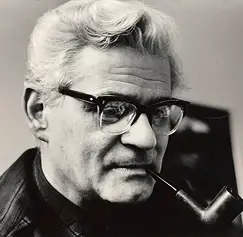
George Devine (1910–1966)
Was a highly influential English theatrical manager, director, producer, teacher, and actor.
Under his leadership, the Royal Court launched the careers of groundbreaking playwrights such as John Osborne (Look Back in Anger), Arnold Wesker, John Arden, and many others, revolutionising post-war British theatre.
He also co-founded the Old Vic Theatre School and was awarded a CBE (Commander of the Order of the British Empire). Devine died in 1966 at age 55. The George Devine Award for new playwrights was created in his honour.
Treating Hamlet Like a New Play
Let’s look at Hamlet. It is easy to forget that this mighty play didn’t always exist. That at some point a playwright actually sat down to write it. And although the story existed in various forms; the shape, tone, themes, philosophies and language of this particular version were still up for grabs.
There was a moment, believe it or not, when “To be or not to be” didn’t exist. And then a brief moment before our playwright’s pen completed the thought with “that is the question”. Giving the verse line eleven syllables rather than the usual ten.
And as our playwright continued he decided to scatter the speech with more eleven syllabled verse lines. Perhaps indicating his Hamlet is feeling a little off centre. A little out of step. In limbo. Questioning. With a few beats too many.
And then, when Ophelia, Hamlet’s ill-treated girlfriend enters the scene and attempts to give him back all the letters and gifts that he’s ever given her, in the absence of stage directions and a proper rehearsal process, our playwright decided to make Hamlet switch from verse to prose, to indicate to the actors, and the audience, that the character and the scene has shifted. They will be at odds with each other and speak in different languages, despite still speaking the same tongue. An unwieldily looseness in the hurt Hamlet’s prose as he cruelly mocks her and lashes out, played against a equally hurt Ophelia trying to calm and understand him and maintain some kind of dignity within the safety of her verse.
And so, decision by decision this new play, worked its way into existence. Surprising its author, surprising its actors, surprising its audience and continuing to surprise us to this day.
(Incidentally, may I point out, all of the decisions mentioned above are psychologically complex, naturalistic, credible, specific, dynamic and in true “timeless” fashion, frighteningly relevant and familiar to any individual who has ever hurt or been hurt by the person they love. Never underestimate a genius).

Genius One
There are two reasons why Shakespeare continues to surprise us.
The first reason is his understanding of humanity. The more I read or see these plays the more I see myself hiding amongst the pentameter. Through the cacophony of archaic references and baffling vocabulary, I hear living breathing human beings crying out to be understood. Sophisticated, flawed, breathtakingly well-observed and shockingly similar to myself and everyone I know.
Despite the 400 year difference it seems humans are humans are humans. It’s like going to mars and finding a Starbucks. I’ve had that thought. I’ve felt that pain. I’ve observed that very thing. I thought that was only me. When the hell did these strange little corseted, ruff-wearing, god-fearing, barbaric, bigoted, unwashed, empire building monsters share so many of my thoughts, feelings and life experiences. More uncanny than watching a chimp smoke a cigarette is hearing a line from an Elizabethan play and have it speak to you in the most intimate way.
Genius Too
The other reason why his work endures is the method by which he communicates this humanity.
The literary genius of Shakespeare is known the world over. It is, however, most acutely felt from an English speaking point of view. It was the Elizabethans who finally defined what conversational English language sounded like.
From the sing-song tetrameter and heptameter of the medieval passion plays we suddenly hear pentameter. It turns out that a verse line consisting of five two-syllabled feet, sounds very much like everyday English speech. The exact length of phrase that our English speaking brains can swallow in one bite. Who’d have thought? Alexandrine (seven metrical feet) is great for conversational french, but it’s too long for English.
And with iambic and trochaic feet, they nailed down how verbal communication works. We don’t stress every single noise that comes out of our mouths because we couldn’t hear and process every single noise that comes out of our mouths. We generally stress and hear every other noise. How interesting.
So imagine being on the wave of this new discovery and able to observe it, master it and then harness it for dramatic effect. We might influence HOW our lines are spoken. We might influence HOW a moment is played. We might express psychology through rhythm. Emotion through irregularity. Propel or deescalate a scene with scansion. Indicate enthusiasm, exhaustion, madness, despair. We might support our meaning to bring clarity or undermine it to create subtext. We may say one thing but have something else being said underneath. To have form and content either playing together or totally at odds. This is exactly what the Elizabethans, and Shakespeare most masterfully, were playing with.
It’s akin to how music works. The key is bright but the rhythm uneasy. The notes are gentle but the tempo manic. Any musician with training can pick up a score and instantly have an idea of how to play it. It’s the same here. Imagine getting direction without a director. Having a process before rehearsals begin. Being in direct dialogue with a playwright who died nearly half a millennia ago.
But in order to have this insight, to talk to the dead, to work alongside genius, we have to study and learn the language. Feel the steadiness and trust in the naturalism of iambic pentameter and then observe where it corrupts – feel the trochee, observe the weak ending, drive the repetition and the anaphora and the alliteration, celebrate the imagery, point up the antithesis, lean into the rhyme, make explicit the metaphor and see the simile.

Artistic Differences
Now of course we can ignore it all. Art cares little for rules, and evolution is at the heart of our industry. Our production might be saying something very personal. Very of the moment. We may need to deconstruct to make our point. Reapportion, reverse, re-gender and rearrange. Shakespeare is amazingly robust and infinitely pliable.
And lets not kid ourselves, there’s much of Shakespeare’s work that, for a modern audience, is not only hard to understand (a lot of archaic words, a lot of archaic puns, a lot of archaic references) but also very hard to stomach (a lot of white men, a lot of disempowered women, a lot of other cultures, ethnicities and religions often – though markedly not always – mocked, generalised and despised).
A faithful word for word pedantic rendering of these plays might well be nothing more than an historical curiosity. But equally, a totally naturalistic rendering with modern speech patterns and 21st Century behaviourism, won’t bring the clarity and immediacy that we expect it might.
So let’s interpret with knowledge. Let’s know what we are deconstructing. Let’s find equivalents that don’t trivialise or lower the stakes or lose the sense. Let’s not miss the point and fail to see that Shakespeare was perhaps making the same point, with greater complexity, greater ingenuity, greater integrity and greater impact.
Let’s stand on his shoulders not kick him in the shins. Let’s listen to his insight, not interrupt him mid-sentence.
A good rule of thumb is: if you find that his play is getting in the way of your production, maybe you should be doing a different play.
Practical Homework: 9 Steps for Approaching Shakespeare
There are numerous books about verse and playing Shakespeare, so I won’t waste too much space here, but, as either an actor or a director, these are the fundamentals that I always use when approaching his work:
I read the play carefully.
Look up every word I don’t understand and work out every thought I can’t get my head around. (I always think that the best practice is if the cast paraphrase all of their lines in the first week of rehearsals, so that we are in agreement. It is extraordinary the amount of interpretations a single line can produce).
Look at the rhetorical devices being used (verse structure, irregular emphasis, length of line, assonance and alliteration, rhyming, use of prose, repetition, antithesis, shared lines, half lines, pathos, logos, ethos etc) and ask what they say about how the characters feel, what they are trying to achieve and how they are trying to achieve it.
As with every other play I note down what everyone says about my character, what I say about my character and what my character says about everyone else.
Based on the text, create a timeline of events leading up to when the play starts and then work towards a shared history with the other actors. (Shakespeare is very loose with time and can make this an impossible task, but if the company can create their own logic from what has been said, everyone will at least be on the same page). And the timeline should, of course be based in the period that the production is set.
Write down a list of facts, again from the text (dates, locations, family structures etc) and also a list of questions (When exactly did the king die? How long have they been on the island? What happened to their child?) and then again work together towards answering those questions.
If a character is an historic figure, I research them to see if there’s anything useful to be added into the mix. Perhaps Shakespeare may have had these facts in his head as he wrote. (If, however, he has chosen to disregard the facts or even contradict them, always go with his version – don’t confuse the audience with inexplicable detail).
Be brave. This dialogue requires robustness. The words and rhetorical devices are there for the character to communicate with and achieve their objectives. If you try and naturalise too much, the words become troublesome and a hindrance. If you use them as intended they become powerful and persuasive and necessary.
→ Related Reading: Martin Hutson Interview – The Director Behind a “Five-Hamlet” Hamlet
→ Related Video: Martin Hutson Interview – The Director Behind a “Five-Hamlet” Hamlet

Conclusion: Why Shakespeare Still Speaks to Us
There is a reason why Shakespeare’s work is still around. Why he continues to speak to us from beyond the grave – warning us and instructing us, seeing us and holding us.
For me Art is about not being alone. Art reveals that the fundamental human experience is universal and shared and that neither age nor ethnicity, gender nor even time can separate us.
If we approach Shakespeare’s plays with the same open mindedness and enthusiasm and respect as we do a new play, and are willing to do the work that is required to release them, we will find ourselves – complicated and imperfect and broken and beautiful.
I promise you that it’s worth the effort. There are so many new plays to discover that may already be sat on your shelf.
Frequently Asked Questions about Shakespeare
How many plays did Shakespeare write?
William Shakespeare wrote 37 plays (some sources say 38–39 including collaborations). His complete works also include 154 sonnets and several long poems.
What is Shakespeare’s first play?
Shakespeare’s first play is generally believed to be Henry VI, Part 1 (around 1590–1591), though some scholars argue The Two Gentlemen of Verona or Titus Andronicus may have been written earlier.
When did Shakespeare start writing plays?
Shakespeare began writing plays around 1590–1592. By 1594 he was a key member of the Lord Chamberlain’s Men theatre company, where he wrote, acted, and became a shareholder.
What is Shakespeare famous for?
Shakespeare is famous for his masterful plays and sonnets that explore universal human themes – love, power, betrayal, revenge, madness, and ambition. His works revolutionized English drama and language.