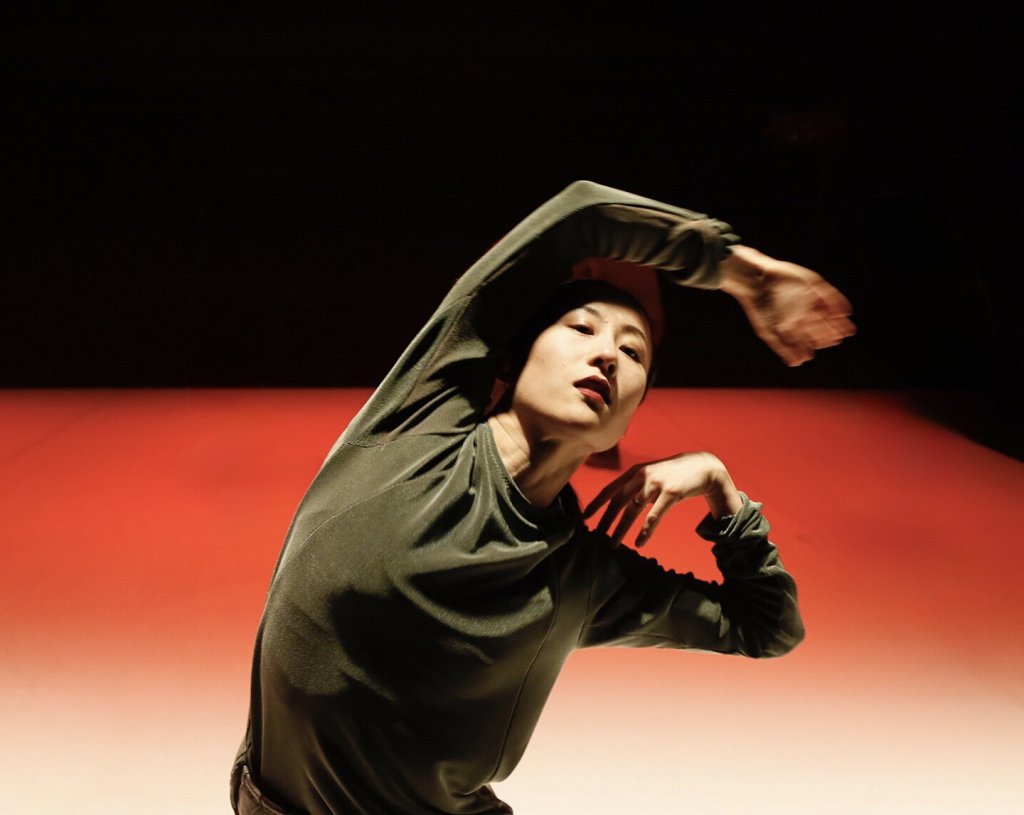
He auditioned for ballet in tennis shoes, nearly missed a Disney casting, and found his character two months into a musical run. Meet Yeray Costa – IAB graduate, commercial dancer, and now a fixture on one of Spain’s most-watched TV shows.
Yeray Costa didn’t find the IAB through a carefully planned career move. He found it through a friend, a Google search for “commercial dance in Barcelona,” and what he describes as a moment that felt like it came out of nowhere.
A few years later, he’s dancing on national television, has performed in Kinky Boots, and recently returned to IAB to teach during Industry Week 2026. His story is one of instinct, hustle, and learning – often the hard way – what it really takes to build a life in dance.
We caught up with Yeray between rehearsals to talk about his journey, the chaos of auditions, and the advice that has stuck with him since his time at IAB.
How did Yeray first discover IAB Barcelona?
It wasn’t a straight path. After finishing school, Yeray found himself in London – not entirely sure what he wanted to do – studying English and taking dance classes while applying to performing arts schools. None of the schools he applied to accepted him. Then, almost by accident, a friend sent him a link.
Auditioning in Tennis Shoes
“I searched something like ‘commercial dance in Barcelona’ and IAB came up,” Yeray recalls. “I had never heard of it in my life. It felt like it came from heaven.“
A conversation with his parents and an audition followed – a rigorous process covering multiple disciplines, including a ballet session that Yeray approached rather unprepared, having not practised ballet in years and, memorably, showing up in tennis shoes. He got through it. But IAB’s audition process is designed to test range, adaptability, and potential – not just technical polish – and Yeray had enough of all three to earn his place.
What was it like to return to IAB as a teacher during Industry Week?
Coming back felt different from what Yeray had expected. Teaching wasn’t something he had rushed into after graduating – he had deliberately held back until he felt he had something real to offer.
“I didn’t want to leave IAB and immediately start teaching,” he explains. “I felt like to be a teacher you need to have something behind you – a practice, a movement, a way of working that you’ve actually developed.” Over time, and through several projects in Barcelona, he began to find that language. Returning to IAB with it felt meaningful in a way it wouldn’t have earlier.
“Being an alumnus made it better,” he says. “I’ve been in their position. I felt like I could actually say something useful – not just about movement, but about what’s waiting for them out there.“
The Chaotic Reality of Dance Auditions
Chaotic is the word Yeray reaches for first. The audition circuit, especially in Madrid, moves fast and doesn’t always follow predictable rules. Many of his biggest opportunities haven’t come through open castings at all – they’ve come through relationships built over time, from being seen in the right room at the right moment.
A casting for Eufòria in Barcelona turned out to be a quiet turning point. It put him in front of choreographers who hadn’t seen him before, and one of those connections eventually led to an invitation to a private casting for a Eurovision proposal – which he didn’t get. But the choreographer called him afterwards.
“He told me: ‘I’m not taking you because of other factors, not because of what I saw. I’ve seen you work and I want to work with you,’” Yeray recalls. That conversation led directly to his first season on Tu cara me suena.
Open castings, when they do happen, can be just as unpredictable. Yeray once rushed from a rehearsal to a private Disney audition for Rapunzel with almost no preparation – no warning to his colleagues, no time to warm up – simply because he heard about it last minute and didn’t want to miss the chance. “If I’d known about it earlier, I would have prepared properly,” he says. “But that’s just how it goes sometimes.“

What was performing in Kinky Boots like, especially the singing?
Yeray arrived at the Kinky Boots audition knowing almost nothing about the show, except that it involved drag queens in heels. He prepared a singing piece as requested, despite singing not being his strongest suit, and focused on doing what he knew best.
“The choreographer was working in a way that felt natural to me – it wasn’t far from what I’d do in a heels class,” he says. “That gave me confidence.” He got the role.
But performing in a full musical is a different challenge from a casting. Yeray spent the first two months of the run struggling to find his character – a performer called Angel – before something finally clicked. Once it did, the show transformed.
“After those two months, the musical got better for all of us because we all found our Angel,” he says. “It became genuinely fun. We’d walk into the factory scenes and go completely wild.” He’s quick to add that he wouldn’t rule out another musical – Moulin Rouge is on his wish list.
The unexpected bonus was vocal. By the end of the run, Yeray had improved noticeably at singing while dancing – controlling his breathing, hitting notes mid-choreography. “It came as a great learning experience,” he says. “I didn’t expect that.“
For readers unfamiliar with the show: Tu cara me suena is one of Spain’s most popular entertainment programmes, in which celebrities and well-known performers impersonate famous artists – musicians, iconic acts, figures from across decades of pop culture – in front of a panel of judges. Points accumulate over the season and are eventually donated to charity. It is, above all, a show built around transformation and spectacle.
Yeray is part of the show’s ballet company, performing each week in routines built around that week’s impersonations. Every number is learned, performed, and then cleared away to make room for the next. It’s a relentless creative rhythm – and one that has stretched his range considerably.
“You end up learning choreographies you’ve watched at home, from choreographers you follow, sometimes imitating performers who originally danced in those exact routines,” he says. “That’s a strange and wonderful feeling.“
His personal highlight from his first season was a number set to Sports Cars with Melanie, performed near the finale. “It was a very complex choreography, and I had a prominent position,” he recalls. “I prepared intensely and it paid off. That’s the one I’ll always remember from that season.“
The show has also brought unexpected human moments – meeting celebrities he had watched on screen for years and finding they were nothing like he’d imagined. Jesulín de Ubrique, a figure Yeray admits he approached with some wariness, turned out to be among the warmest people on set. “He treated us the best,” Yeray says. “Those moments teach you not to judge before you actually meet someone.“

How does he look after himself through such a demanding schedule?
His first season on Tu cara me suena, Yeray was also performing in another project on weekends. It was too much, and he knew it.
“I really struggled,” he admits. “By the end, I had learned what I needed – vitamins, sleep, eating differently, staying off my phone at night.” That last point sounds small but mattered more than he expected. Screen time was quietly destroying his sleep quality; cutting it back made a tangible difference.
Now he approaches each season with a deliberate preparation phase starting in September – building physical strength before the intensity kicks in. During the season itself, he leans on stretching, warming up and cooling down consistently, and protecting his days off rather than filling them.
“My body tells me when it needs rest, not more training,” he says. “And I’ve learned to listen to that.“
What qualities does he think a commercial dancer needs today?
Versatility, above everything else. The commercial dance world has more trained dancers than ever before, and the work itself can pull in any direction – a pop artist might decide their tour concept requires Broadway-style jazz, a TV show might pivot to contemporary in the same week. Being fluent across styles is no longer a bonus; it’s a baseline.
But Yeray also talks about something less technical: knowing yourself well enough to say no. “At the beginning, you take everything because you have to,” he says. “But eventually you have to be honest with yourself about what you want to offer and who you want to be as a dancer. Even if a job is offered, you should be able to turn it down if it doesn’t fit.“
Two things, really. The first he shared with students when he came back to teach: cherish the time you’re in that building, because you won’t live it again. Once everyone goes their separate ways, something is gone that can’t be recovered.
The second is more practical, and it has shaped how he moves through the professional world:
“You never know who is going to give you work –
or take it away.“
“It might be the technician, the sound person, the makeup artist,” he says. “People talk, and in this industry, word travels. Being kind, treating everyone with equal respect – it matters more than most people think. I learned that clearly, and I think about it every day on set.“
Yeray’s story shows that instinct, resilience, and the right training can take you far. Ready to write your own dance career? Explore IAB Barcelona’s Commercial Dance programme and audition dates. Follow Yeray on Instagram [@yeraycosta_] for more inspiration.

Interview by Zeb Díaz
Article by Sara Barbieri
Videography by Roger Bayerri