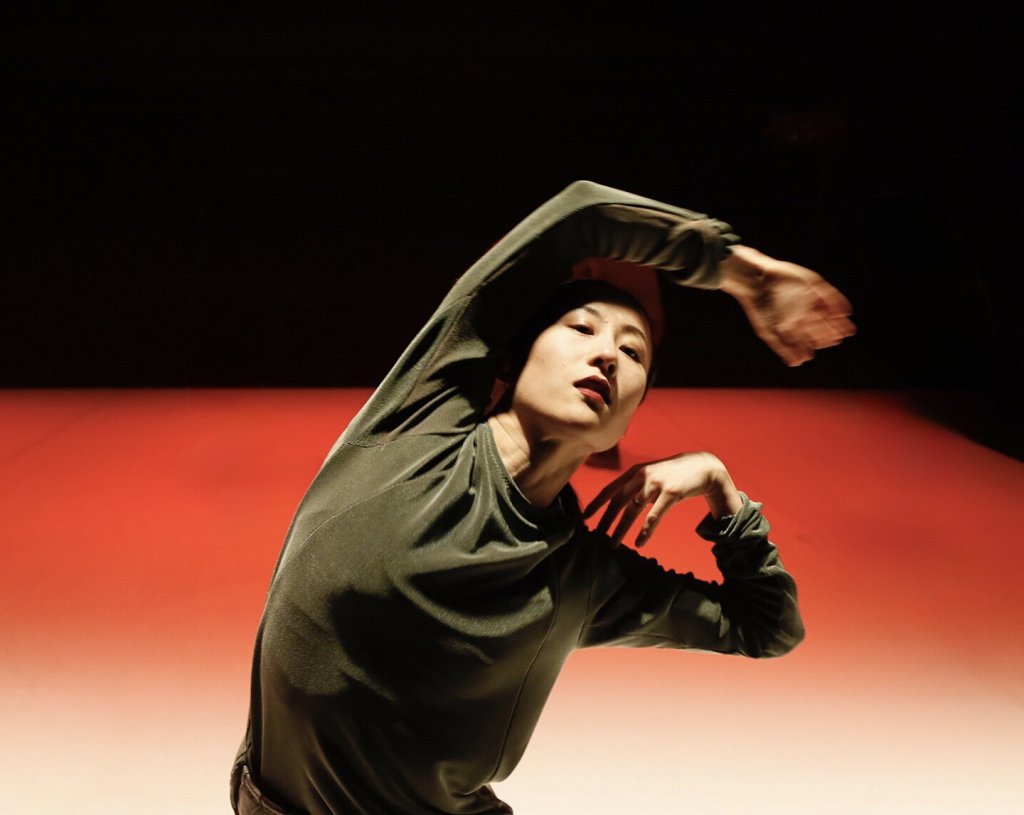
About Cristian Izzo
Cristian Izzo is an Italian actor, director, playwright, and poet born in 1990 in Castellammare di Stabia, Italy. Specializing in commedia dell’arte, he is known for his dynamic approach that blends classical techniques with contemporary physical theatre, clowning, and circus elements.
He made his professional acting debut at age 18 under director Armando Pugliese. Since then, he has performed internationally and received multiple awards, including Best Male Actor and Outstanding Solo Performance at the Quinta International Theatre Festival in Rhodes (2020).
As a director and lecturer, Izzo has worked extensively with the Institute of the Arts Barcelona (IAB), where he has served as an external lecturer since 2021 and directed productions such as The King Stag by Carlo Gozzi (2024) and A Servant of Two Masters by Carlo Goldoni.
In addition to his theatre work, he is an accomplished writer. He has published poetry collections and award-winning plays, and has been featured in international festivals and academic journals. Izzo’s work emphasizes the power of the mask, improvisation, and the actor’s freedom on stage.
Related Reading -> Commedia Dell’Arte: An Introduction to Origins of Modern Theatre
What happens when you hand third-year acting students one of Italy's most chaotic, joyful, and technically demanding plays? You bring in Cristian Izzo.
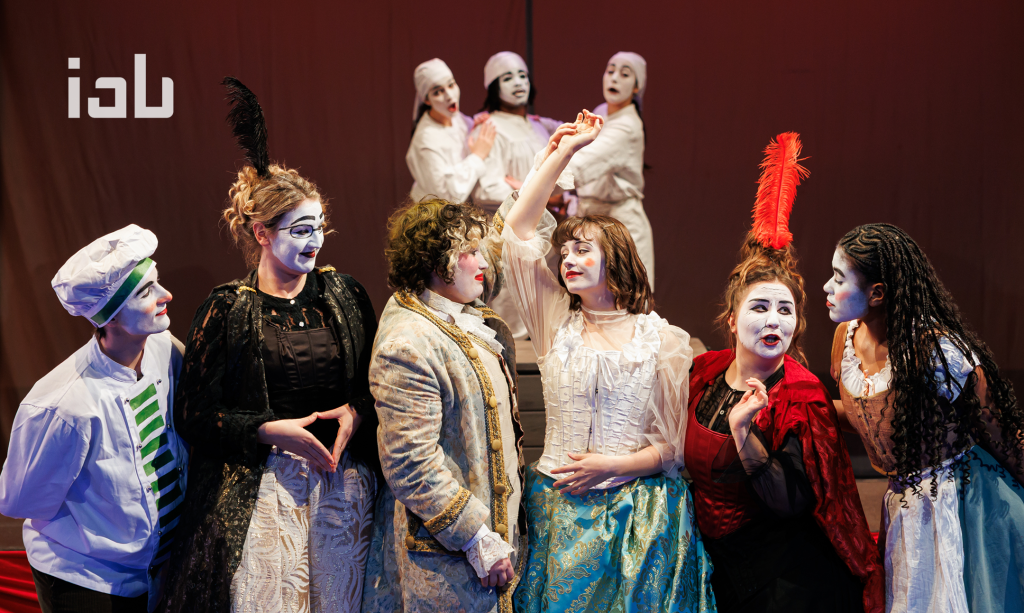
Last semester, IAB Barcelona’s third-year students took on one of the pillars of Western theatre: A Servant of Two Masters by Carlo Goldoni. Guiding them through it is Cristian Izzo, an Italian theatre director with a deep specialisation in Commedia dell’Arte who joins the production as guest director. His role goes far beyond staging scenes – he’s asking students to move faster, think quicker, and rediscover something they may have left behind years ago: the ability to play like a child.
We sat down with Cristian to talk about the production, the philosophy behind commedia dell’arte, and why the mask might be the most honest thing an actor can wear.
What is A Servant of Two Masters about?
For those unfamiliar with the text, A Servant of Two Masters is exactly what it sounds like, and far more complicated than it has any right to be. The story centres on Arlecchino, one of the most iconic figures in Italian theatre, who finds himself serving two masters simultaneously without either one knowing. What begins as a logistical nightmare quickly becomes a comedy of errors involving mistaken identities, secret lovers, and one remarkably overworked servant.
As Cristian explains it: Arlecchino is initially hired by Federigo Rasponi – except Federigo is dead. The person on stage bearing his name is actually his sister Beatrice, who is travelling in disguise to find her lover, Florindo Aretusi, the man accused of killing her brother. Arlecchino, oblivious to all of this, ends up in the service of both Beatrice and Florindo at once, juggling two identities, two households, and two sets of demands – until, inevitably, everything unravels and the two lovers are finally reunited.
It’s a plot built on momentum, misunderstanding, and mischief, which is exactly what makes it so demanding to perform.
Who is Arlecchino, really?
Beyond the slapstick and the acrobatics, Arlecchino is a character of surprising depth. Cristian draws a direct line between him and some of theatre’s most beloved figures: Puck from A Midsummer Night’s Dream, the Fool from King Lear – characters who seem to stumble through events but somehow see more clearly than everyone around them.
“He is clever, but also clumsy,” Cristian says. “He is always sure he knows how to manage things, even when everything is falling apart.” It’s a contradiction that runs through the entire tradition of commedia dell’arte: the fool who is also the wisest person in the room. Arlecchino doesn’t just entertain, he reflects. And it’s that quality that has kept him alive on stage for over four hundred years.

What does it really mean to direct Commedia dell’Arte?
One of the most striking things about Cristian’s approach to this production is what he’s not trying to do. Commedia dell’arte was never written to be directed, the role of the director as we understand it today didn’t exist when these plays were first performed. The form belongs, fundamentally, to the actor.
“I love to say it’s about the omnipotence of the actor on stage,” Cristian explains. “After we’ve built the play together, my job is to let them know there’s a zone of freedom: a space where they can improvise, where they can create something new every night. That can’t be pre-ordered. It has to happen live.“
This is a significant shift for many students trained in more text-driven approaches. In Commedia dell’Arte, the script is a skeleton, not a blueprint. What fills it out: the timing, the physical gags, the relationship with the audience is alive and changing. Every performance is, in a sense, a new one.
Related reading:
→ Commedia dell’ Arte: An introduction to origins of Modern Theatre
What does Commedia dell’Arte demand from the body?
If the freedom of Commedia dell’Arte is liberating, its physical demands are anything but easy. Cristian describes his rehearsal process as an exercise in sustained intensity: high rhythm, constant action, no moment of stillness that hasn’t been earned.
“While you’re speaking your lines, you have to keep doing things — acting, moving, reacting,” he says. “There is never the possibility of just standing and speaking.” The rhythm he’s looking for is almost childlike in its energy, and that’s entirely intentional. Cristian speaks about trying to reconnect the actors with a “child identity”: a state of spontaneous, instinctive play, while simultaneously asking them to execute it with genuine technical precision. It’s a paradox at the heart of the form: total freedom, total control.
It’s a question Cristian has spent years thinking about. When he looks at Commedia dell’Arte productions around the world, he often finds something closer to a museum exhibit than a living theatrical tradition – forms preserved in amber, reproduced faithfully but without urgency.
His answer, both as a director and as a practitioner, is to contaminate. He deliberately brings it into contact with contemporary circus, clown work, mime, and physical comedy: not to dilute it, but to test whether it still has something to say. His conviction is that it does.
“I try to combine it with elements of contemporary performance because I think it still has its power,” he says. “But you have to be willing to look for it.“
What is the mask really for?
Ask Cristian about Commedia dell’Arte and sooner or later the conversation arrives at the mask: not just as a prop, but as a philosophy. He reaches for two quotes that have clearly shaped his thinking deeply.
Oscar Wilde: “Give me a mask, I’ll tell you all the truth.”
Nietzsche: “Everything that is deep is in love with the mask.”
For Cristian, the mask is not a barrier between the actor and authenticity, it’s a pathway to it. “We recognise reality through forms,” he explains, “and the mask is a form. If you embrace the mask, you end up embracing the truth.” It’s an aesthetic truth, perhaps, but it is still a truth.
This is the invitation he extends to students curious about Commedia dell’Arte: stop thinking of the mask as something that hides you. Start thinking of it as something that sets you free.

Which mask does Cristian Izzo call his own?
When asked about his own favourite mask, Cristian doesn’t hesitate. It’s Pulcinella: the black-and-white figure of Naples, worn by clowns and street performers for centuries -and his connection to it goes back to childhood.
“When I was five years old, I had a teacher who was so deeply in love with Pulcinella that he asked to be buried wearing the mask,” Cristian recalls. “That stayed with me.” What draws him to the character is its essential contradictoriness: noble and cowardly, gentle and rude, feminine and masculine. Pulcinella holds every human contradiction at once, without resolving any of them. “He’s yin and yang,” Cristian says. “He has all the contradictions of the human being inside him.“
It’s a fitting mascot for a director who asks his actors to be both free and disciplined, both childlike and professional, both themselves and someone else entirely.
Productions like A Servant of Two Masters offer students the opportunity to engage with classical texts through a contemporary lens, developing both technical skill and creative independence.
By working with industry professionals like Cristian Izzo, students experience first-hand the balance between structure and freedom that defines professional theatre-making today.
A Servant of Two Masters, directed by Cristian Izzo, is performed by IAB Barcelona’s third-year students. Learn more about the production at IAB here.
FAQs
What is A Servant of Two Masters by Carlo Goldoni?
A Servant of Two Masters is a classic 18th-century comedy by Carlo Goldoni and one of the most famous works of Commedia dell’Arte. The play follows Arlecchino, a servant who accidentally ends up working for two masters at the same time, creating a chain of misunderstandings, disguises, and comic situations. At its core, the story blends physical comedy with themes of love, identity, and deception.
Who is Arlecchino in commedia dell’arte?
Arlecchino (Harlequin) is one of the most iconic characters in Commedia dell’Arte. He is a clever yet clumsy servant, known for his quick thinking, physical agility, and mischievous nature. While he often appears foolish, his actions reveal a deeper intelligence and adaptability, making him both comic and unexpectedly insightful.
What is the meaning of the mask in commedia dell’arte?
In Commedia dell’Arte, the mask is not used to hide the actor, but to reveal a deeper truth about the character. It represents a fixed social type or archetype, allowing performers to explore exaggerated physicality and emotion. As many practitioners suggest, the mask becomes a tool for accessing authenticity through form — a way of expressing human behaviour in a stylised yet truthful way.
Why is commedia dell’arte still relevant today?
Despite its origins in 16th-century Italy, Commedia dell’Arte remains relevant because of its focus on universal human behaviours, physical storytelling, and improvisation. Contemporary practitioners often combine it with modern forms such as clowning, physical theatre, and circus, allowing it to evolve and connect with today’s audiences while maintaining its original energy and spirit.
What are the physical demands of performing commedia dell’arte?
Performing Commedia dell’Arte requires a high level of physical skill and stamina. Actors must combine movement, gesture, and voice simultaneously, maintaining a fast-paced rhythm throughout the performance. It demands strong body awareness, precise timing, and the ability to react quickly, as well as a playful, almost childlike energy grounded in professional technique.
Which mask is Cristian Izzo’s favourite and why?
Cristian Izzo’s favourite mask is Pulcinella, a traditional Neapolitan character. He is drawn to Pulcinella because the character embodies contradiction: both noble and cowardly, gentle and aggressive, comic and tragic. For Izzo, this mask represents the complexity of human nature, containing opposing qualities within a single identity.
How do acting students train in commedia dell’arte at IAB Barcelona?
At the Institute of the Arts Barcelona, students train in Commedia dell’Arte through a combination of physical practice, ensemble work, and performance projects. Working with industry professionals, they develop skills in movement, improvisation, rhythm, and character work, while also learning to balance structure with creative freedom — a key aspect of this theatrical form.
Interview by Zeb Díaz
Article by Sara Barbieri
Photography by Sergi Panizo